
Embarking on the journey of low investment startup business ideas for beginners opens up a world of possibilities and challenges. This guide aims to provide valuable insights and strategies to help you navigate the exciting realm of entrepreneurship with confidence and innovation.
As we delve deeper into the strategies and tips for creating a successful startup with minimal investment, you will discover the key elements that can set you on the path to entrepreneurial success.
Research and Ideation
When starting a low investment startup, it is essential to begin with thorough research and ideation to ensure the success of your venture. By following these methods and understanding the importance of market trends, beginners can identify gaps in the market to capitalize on.
Generating Low Investment Startup Ideas
- Look for problems in your own life or community that need solving. This can lead to innovative solutions that can be turned into a business.
- Explore emerging trends and technologies that have the potential for disruption in existing industries.
- Consider your passions and hobbies - turning something you love into a business can be both fulfilling and profitable.
Researching Market Trends
- Utilize online resources such as industry reports, market analysis tools, and social media trends to stay informed about current market trends.
- Attend industry conferences, trade shows, and networking events to connect with experts and gain insights into upcoming opportunities.
- Study your competitors to understand what is working well in the market and where there may be room for improvement.
Identifying Gaps in the Market for Beginners
- Conduct surveys or interviews with potential customers to uncover pain points and unmet needs that your startup could address.
- Look for underserved or overlooked segments of the market that have the potential for growth and differentiation.
- Keep an eye on emerging trends and technologies that could create new opportunities for innovative products or services.
Business Model Selection

Starting a low investment startup business requires careful consideration of the business model to ensure sustainability and profitability. There are several business models suitable for beginners, each with its own set of pros and cons. Let's explore some options and examples of successful startups with low investment business models.
Dropshipping
Dropshipping is a popular business model where you sell products to customers without holding any inventory. When a customer makes a purchase, the product is shipped directly from the supplier to the customer.
- Pros:
- Low initial investment
- No need to manage inventory
- Flexible location and scalability
- Cons:
- Thin profit margins
- Dependence on suppliers for product quality and delivery
- High competition in the market
Successful dropshipping startups like Oberlo and Spocket have leveraged this model to scale their businesses with minimal investment.
Affiliate Marketing
Affiliate marketing involves promoting products or services from other companies and earning a commission for each sale made through your referral.
- Pros:
- No need to create your own products
- Potential for passive income
- Wide range of products to choose from
- Cons:
- Dependence on affiliate programs and commission rates
- Requires building a strong online presence
- Limited control over product quality and customer service
Successful affiliate marketing startups like The Wirecutter and Authority Hacker have effectively monetized their content through affiliate partnerships.
Content Creation and Monetization
Creating valuable content through blogs, videos, podcasts, or social media can be monetized through advertising, sponsored content, and selling digital products.
- Pros:
- Low barrier to entry
- Opportunity to build a loyal audience
- Diverse revenue streams
- Cons:
- Requires consistent content creation and audience engagement
- Income can be unpredictable initially
- Competitive landscape in content creation
Successful content creators like PewDiePie and Cupcake Jemma have turned their passion into profitable businesses through effective content monetization strategies.
Marketing Strategies
Starting a low investment startup business requires cost-effective marketing strategies to reach your target audience without breaking the bank. Utilizing social media marketing and creating a strong online presence are crucial for beginners to establish their brand and attract customers.
Here are some tips to help you navigate the world of marketing on a budget.
Significance of Social Media Marketing
Social media platforms offer a cost-effective way to connect with potential customers and build brand awareness. By creating engaging content and interacting with your audience, you can increase visibility and drive traffic to your business. Utilize different social media channels such as Facebook, Instagram, Twitter, and LinkedIn to reach a wider audience and engage with customers in real-time.
Tips for Creating a Strong Online Presence on a Budget
- Optimize your website for search engines () to improve visibility and attract organic traffic.
- Create valuable and relevant content that resonates with your target audience to establish credibility and authority in your industry.
- Utilize email marketing to nurture leads and build relationships with customers over time.
- Collaborate with influencers or bloggers in your niche to reach a larger audience and gain credibility.
- Utilize online advertising platforms such as Google Ads or Facebook Ads to target specific demographics and reach potential customers.
- Engage with your audience through social media by responding to comments, messages, and reviews to build trust and loyalty.
Financial Planning
Starting a startup business requires careful financial planning to ensure success. Here are some important steps to consider when creating a startup budget and managing finances effectively.
Creating a Startup Budget
- Estimate your startup costs: Identify all expenses involved in starting your business, including equipment, marketing, legal fees, and operating costs.
- Forecast your revenue: Make realistic projections of your income based on market research and industry trends.
- Track your expenses: Keep detailed records of all expenses to monitor cash flow and identify areas where costs can be reduced.
- Set aside a buffer: Allocate funds for unexpected expenses or emergencies to avoid financial strain on your business.
Minimizing Costs and Maximizing Profits
- Outsource non-core tasks: Consider outsourcing tasks like accounting, IT, or marketing to reduce overhead costs and focus on core business activities.
- Negotiate with suppliers: Build strong relationships with suppliers and negotiate favorable terms to lower costs and improve margins.
- Implement cost-saving measures: Look for opportunities to reduce expenses without compromising quality, such as using energy-efficient equipment or digital marketing strategies.
- Diversify revenue streams: Explore new markets or product offerings to increase revenue and minimize dependency on a single source of income.
Financial Management for Beginners in Startups
- Separate personal and business finances: Open a business bank account and track business expenses separately to maintain financial clarity and organization.
- Monitor cash flow regularly: Keep a close eye on cash flow to ensure sufficient funds for operations and identify potential financial challenges early on.
- Seek financial advice: Consider consulting with a financial advisor or mentor to gain insights on managing finances effectively and making informed decisions.
- Invest in financial literacy: Take the time to educate yourself on financial terms, concepts, and strategies to improve your financial management skills and make informed financial decisions.
Summary
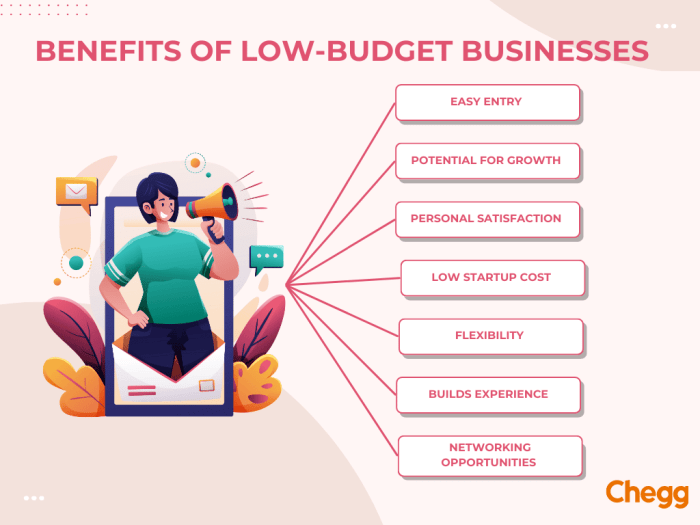
In conclusion, the world of low investment startup business ideas for beginners is filled with potential and promise. By leveraging the right strategies and taking calculated risks, you can turn your entrepreneurial dreams into a thriving reality. Explore, innovate, and seize the opportunities that come your way as you embark on this exciting journey of entrepreneurship.
Essential FAQs
What are some methods for generating low investment startup ideas?
One effective method is to identify your own skills and passions and find ways to monetize them. You can also observe market trends and consumer needs to uncover potential business opportunities.
How can beginners minimize costs and maximize profits in their startups?
Beginners can minimize costs by outsourcing non-core activities, negotiating with suppliers for better deals, and utilizing cost-effective marketing strategies. To maximize profits, focus on providing value to customers and continuously optimizing your business processes.
Why is social media marketing significant for beginners in the startup business?
Social media marketing offers a cost-effective way to reach a wide audience, engage with potential customers, and build brand awareness. For beginners with limited resources, social media platforms provide a valuable tool for promoting their products or services.