
Embarking on the journey of starting a new business is both exciting and challenging. Choosing the right country to launch your startup can significantly impact its success and growth. In this guide, we will explore the best countries around the world that offer favorable environments for startups to thrive.
From economic indicators to government support, we'll delve into the key factors that make these countries ideal for budding entrepreneurs.
Factors to consider when choosing the best countries to launch a startup business
When considering the best countries to launch a startup business, various factors play a crucial role in determining the success and growth potential of the venture. From economic indicators to regulatory environments, infrastructure, and talent pool, each aspect contributes to creating a conducive environment for startups to thrive.
Key economic indicators to evaluate a country’s business environment
- Economic stability and growth prospects
- Gross Domestic Product (GDP) per capita
- Inflation rate and currency stability
- Access to funding and investment opportunities
Importance of infrastructure and technological readiness in a startup-friendly country
- Availability of high-speed internet and digital infrastructure
- Access to co-working spaces and innovation hubs
- Presence of research institutions and technology clusters
- Supportive government policies for technological advancements
Regulatory environment and ease of doing business in different countries
- Simplicity and transparency of business registration processes
- Tax regulations and incentives for startups
- Intellectual property protection and legal framework
- Flexibility in labor laws and regulations
Availability of skilled labor and talent pool in potential countries
- Educational system and focus on entrepreneurship and innovation
- Presence of a diverse and skilled workforce in relevant industries
- Opportunities for attracting and retaining top talent globally
- Networking and collaboration opportunities with other professionals
Top countries known for startup-friendly ecosystems
When it comes to launching a startup business, the choice of location can significantly impact its success. Some countries have developed startup-friendly ecosystems that provide ample support and resources for budding entrepreneurs. Let's explore some of the top countries known for their vibrant startup scenes.
Robust venture capital funding opportunities
- United States: Silicon Valley in California is renowned for its abundance of venture capital funding, attracting startups from around the world.
- China: With a rapidly growing economy, China offers a wealth of venture capital opportunities for startups looking to scale quickly.
- Israel: Known as the "Startup Nation," Israel has a strong venture capital ecosystem that supports innovative startups in various industries.
Supportive government policies and incentives for startups
- Singapore: The Singaporean government provides various grants and incentives to encourage entrepreneurship and innovation in the country.
- Germany: Germany offers tax breaks and funding programs to support startups, making it an attractive destination for new businesses.
- United Kingdom: The UK government has initiatives like the Start Up Loans program to support aspiring entrepreneurs in launching their businesses.
Successful startup hubs and communities
- India: Tech hubs like Bangalore and Hyderabad have thriving startup communities, fostering collaboration and innovation among entrepreneurs.
- Sweden: Stockholm is home to a vibrant startup scene, with a strong focus on sustainability and technology-driven solutions.
- South Korea: Seoul has emerged as a prominent startup hub in Asia, with a supportive ecosystem for tech startups and entrepreneurs.
Networking opportunities and access to mentors
- Japan: Tokyo's startup ecosystem offers access to experienced mentors and networking events that help startups connect with potential investors.
- Australia: Cities like Sydney and Melbourne host numerous networking events and accelerator programs that provide startups with valuable mentorship and support.
- Canada: Startup hubs in cities like Toronto and Vancouver offer ample networking opportunities and mentorship programs for entrepreneurs at all stages of their journey.
Challenges faced by startups in different countries
Starting a new business in any country comes with its own set of challenges. From legal and compliance issues to cultural barriers and operational expenses, startups face numerous obstacles that can impact their success.
Legal and Compliance Challenges
In various countries, startups often encounter legal and compliance challenges that can be overwhelming. Different countries have different regulations and requirements for businesses, ranging from registration processes to tax laws. Navigating through these legal complexities can be time-consuming and costly for startups.
Cultural Barriers and Differences
Cultural barriers can significantly impact the success of startups in different countries. Understanding the local culture, business practices, and communication styles is crucial for building relationships and establishing trust with customers and partners. Failure to adapt to cultural differences can lead to misunderstandings and hinder business growth.
Cost of Living and Operational Expenses
The cost of living and operational expenses vary greatly from country to country. Startups need to consider factors such as rent, utilities, salaries, and transportation costs when establishing their businesses. High operational expenses can put a strain on a startup's budget and affect its long-term sustainability.
Language Barriers and Communication Challenges
For international startups, language barriers can pose significant challenges in conducting business operations. Miscommunication due to language differences can lead to misunderstandings with customers, suppliers, and employees. Overcoming language barriers through hiring multilingual staff or using translation services is essential for successful international expansion.
Emerging startup destinations to watch out for
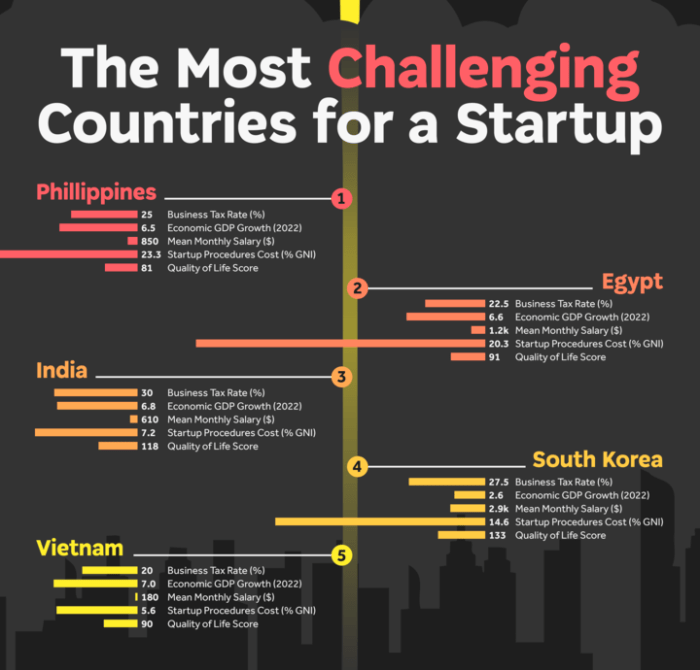
As the startup landscape continues to evolve, new destinations are emerging as hotspots for innovative businesses to thrive. These up-and-coming countries offer untapped market opportunities and the potential for scalability and growth.
Latin America
Latin America is gaining attention as a promising region for startups, with countries like Brazil, Mexico, and Colombia leading the way. These countries boast a growing tech-savvy population, government support for entrepreneurship, and a vibrant startup ecosystem.
Southeast Asia
Southeast Asia is another region to watch for emerging startup destinations. Countries like Indonesia, Vietnam, and Thailand are attracting investors and entrepreneurs with their large consumer markets, digital adoption rates, and supportive regulatory environment.
Africa
Africa is increasingly becoming a hub for innovative startups, with countries such as Kenya, Nigeria, and South Africa showcasing a growing entrepreneurial spirit. These nations offer opportunities in sectors like fintech, agritech, and e-commerce, leveraging technology to drive social impact and economic growth.
Last Recap
As we conclude our discussion on the best countries to launch a startup business, it becomes evident that the global landscape for entrepreneurship is diverse and full of opportunities. By considering the factors we've explored, aspiring startup owners can make informed decisions that pave the way for their business success.
Remember, the world is your oyster when it comes to launching a startup - choose wisely and embark on your entrepreneurial journey with confidence.
Frequently Asked Questions
What are some key economic indicators to consider when choosing a country to launch a startup?
Key economic indicators include GDP growth rate, inflation rate, unemployment rate, and ease of doing business index.
Which countries offer robust venture capital funding opportunities for startups?
Countries like the United States, China, and India are known for their strong venture capital ecosystems.
What are some common legal and compliance challenges that startups may face in different countries?
Legal challenges can include complex tax regulations, intellectual property rights protection, and data privacy laws.
How can cultural barriers impact the success of a startup in a foreign country?
Cultural differences can affect communication, business etiquette, and relationship building, which are crucial for startup success.